NEWS

《 審査員紹介 》 1月3日には公開審査会を実施

Introduction of the jury 》 Public jury meeting will be held on January 3, 2012.

2018.12.13

The judges for this year's competition were Michiyuki Ishida, representative of the Projection Mapping Association, which is producing this project, AntalessVisualDesign, winner of the Grand Prix in the previous international competition and active in the projection mapping scene around the world, and Bordos Art Works, a pioneer in projection mapping in the world. Bordos Art Works, a pioneer in projection mapping worldwide, and other experts active on the front lines of the industry. The Governor of Miyazaki Prefecture has been selected as a special judge. There is also an ”Audience Award” in which the audience can also participate in the judging. Five prizes will be awarded: Grand Prix, Runner-up Grand Prix, Jury's Special Prize, Miyazaki Prefecture Special Prize, and Audience Prize. László Zsolt Bordos [ Bordos.ArtWorks ] is a CG creator, VJ and art director based in Budapest, Hungary. He has been working on projection mapping expression from the early stage and has made an impact on the world with his works at the Eiffel Tower, a huge hotel in Dubai, and the Mapping Festival. He is one of the world's leading pioneers of projection mapping. < Bordos.ArtWorks / Official WebSite > http://bordos.eu/ Alessio Cassaro [ Antaless Visual Design ] COO of Antaless Visual Design based in Palermo, Italy, Alessio Cassaro has been specializing in video mapping for several years after more than 10 years of experience working in the graphical animation field. He has won many awards at international competitions and won the Grand Prix at the last "1minute Projection Mapping in Huis Ten Bosch". < Antaless Visual Design / Official WebSite >http://www.antalessvisualdesign.com/ Michiyuki Ishita [ PMAJ ] Representative of Projection Mapping Association, creative director, spatial director. Part-time lecturer at Tokyo National University of Fine Arts and Music. He has been involved in numerous spatial productions using video and is one of the leaders of the projection mapping industry in Japan. He has been invited as an official jury member of "Art Vision Contest," one of the world's largest projection mapping competitions, held in Moscow in September 2018. <PMAJ / Official WebSite>http://www.projection-mapping.jp/

ファイナリスト発表!- 1minute Projection Mapping in みやざき

Finalists announced! - 1minute Projection Mapping in Miyazaki

2018.11.29

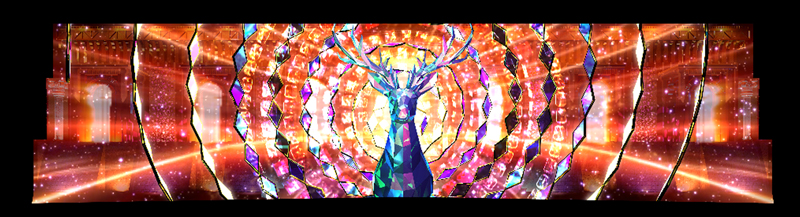
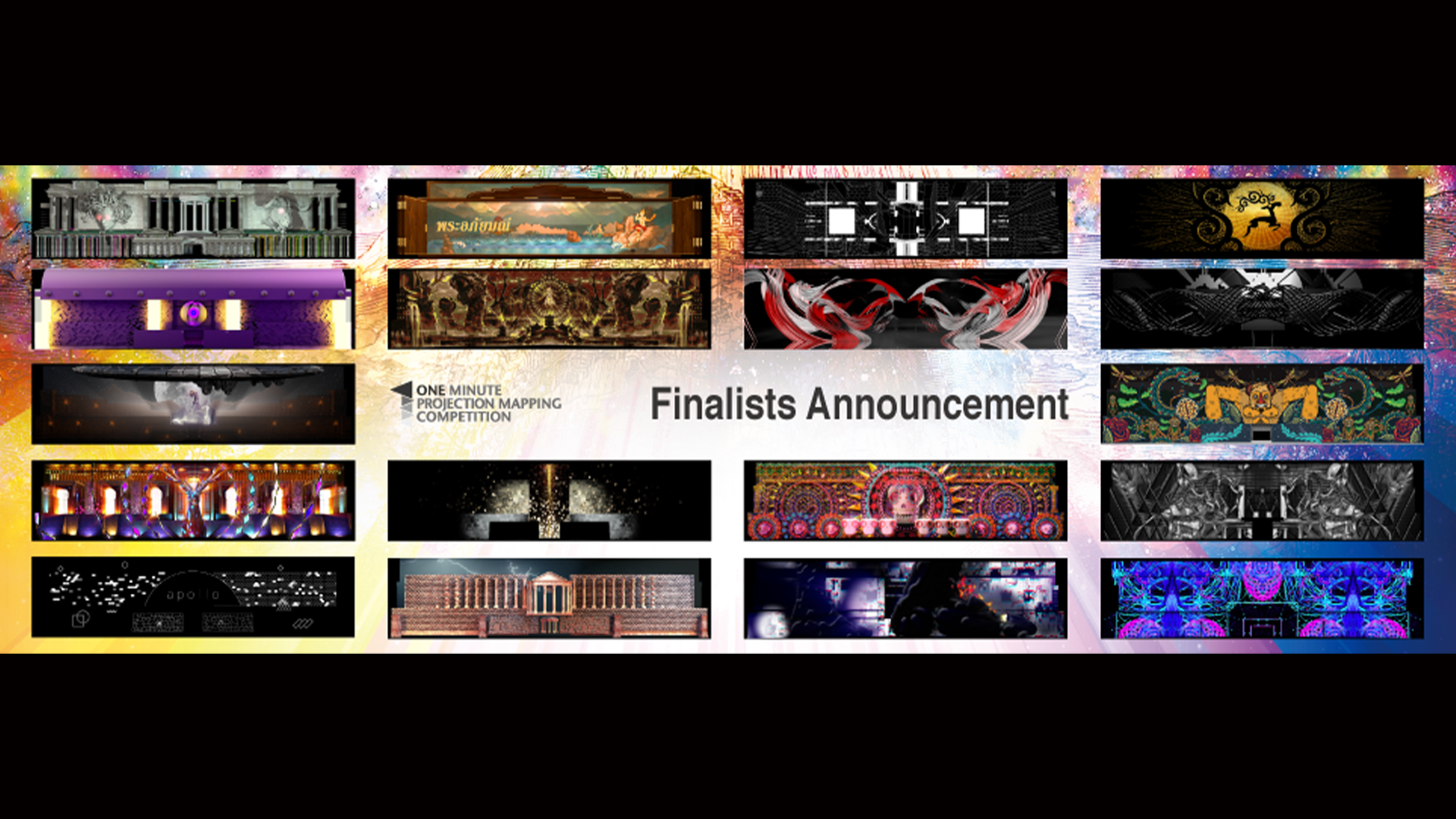
1minute Projection Mapping", an international projection mapping competition that began in 2012 and will be held for the 7th time. This year's competition, held at the Miyazaki Prefectural Art Museum, received 125 entries from a record 42 countries and regions. The judging process was extremely difficult due to the large number of entries, but we are pleased to announce the finalists selected from among them! The following are the 18 finalists for this year's competition* in order of entry* denoted by: team name "title" (country) BBCDesign "Lights" (Japan / Miyazaki) AVA Animation & Visual Arts "Quimera" (Mexico) MotionLab "DREAM MACHINE" (Romania / Serbia) Sunnana inc. "shinrabansho" (Japan) CHAIRHACK "Light and darkness" (Japan & France) Plan A "Miyazaki Titans" (Lebanon) Fluid "Stag" (Hungary) HEART-S "apollo" (Japan) VPM "Yatagarasu" (Spain) YIMSAMER "Pandora" (Thailand) HERMES MANGIALARDO "Amanonuhoko's dream" (Italy) DECIDEKIT "KAMISHIBAI" (Thailand) ruestungsschmie.de "LAYER3" (Germany) nullpixel "Moyocoyani" (Mexico) High Files Visuals "Chaos" (Italy) Overlap "The Myth Animals" (Thailand) RODAR "TrenTren and CaiCai Vilu" (Chile) LiCheng "The Nine Colored Deer" (China) Finalist films will be screened at the Miyazaki Museum of Art from January 1 to January 3, 2019, and the Grand Prix will be decided at a public screening on January 3! We will be broadcasting live on the day of the event, so if you live far away, we hope you will be able to watch the event. We have a wide variety of wonderful works from all over the world under the theme of "Myths/Legends"! Please look forward to it!

第6回大会 審査員総評

6th Competition Judges' Comment

2018.5.22

After the final judging session, the judges have sent us their general comments on this year's competition and reviews of each finalist's work! You can also read the review from the link below. »Jury's Comment (Japanese) *PDF format 1minute projection mapping in Huis Ten Bosch This is the 6th edition of this international competition, which started in 2012, and we, the organizers, have taken on the new challenge of holding it for a long period of time at the famous Huis Ten Bosch amusement park. Building on the history of the many wonderful entries we have received, this year we received a record number of 123 entries from 39 countries and regions. Once again, we would like to thank all the participants for their participation. Now, the judging has been divided into multiple rounds, leading back to the final judging. First, 38 films were selected for judging based solely on the images received from the entries. Next, the actual screening of the films narrowed the field down to 16 finalists, and finally to the public screening on April 28. This year's competition was of a very high level, with a wider range of films than ever before. The judging panel, which included a number of world-class guests, decided on the Grand Prix and other prizes. On behalf of the jury, I would like to summarize the 6th competition as well as the results. The theme of this year's competition was HANA (flower/flower). The process of narrowing down the finalists from the 38 works that passed the preliminary selection was also very difficult. In fact, there were many works of quality that could have remained in the finals, but from the viewpoint of "breadth of works," we had to narrow down works with similar tastes and expressions, and we had to do so with a great deal of patience. In the final judging, the range of entries was so wide that there was much discussion among the judges as to where the judging points should be placed to determine the awards. The finalists were all excellent, each with their own strengths, and the judges had a difficult time deciding which award to give out. The jury members had a difficult time deciding on the awards, and it took them some time to decide on the winners and their works. One of the most impressive aspects of the entire competition was the strong artistic presence of the Spanish artists, who made it to the final three. Another feature was that many of the works featured masks or faces in the center of the building. The Palace Huis Ten Bosch, which served as the projection canvas for this year's competition, was a very wide brick building measuring 28 meters high by 110 meters wide, and we wondered if the artists were able to take advantage of this long horizontal scale. And did we take into account the difference in color of the facade between the bricks, the roof, and the white painted part of the building? These points had a great impact on the degree of completion of the work and the experience at the site, and were also major factors in the evaluation. I also believe that the quality of the international competition has improved due to the fact that there were many challenging works. It is an important stance for an artist to show new methods and directions of expression without tracing existing expressions, and it was gratifying to see many works that showed this. Now, I would like to describe here the key points of each award from the Grand Prix. Grand Prix "ArchiLymph" Antaless Visual Design (Italy) Among these high-level works, the Grand Prix was awarded to the work "ArchiLympht" by AntalessVisualDesign of Italy. The work was selected as a unanimous opinion among all the entries due to its excellent video production and mapping techniques, as well as its well-balanced composition and high judging score. Although it was a work that took the high road of projection mapping, the high degree of perfection and intonation of the production technique made the entire work very impressive and attracted a large number of spectators at the venue. One of the weak points of the competition was the weak impression of the theme, which came up in the judging discussion, as well as the excessive use of 3D animation in the latter half of the competition. However, the quality of the work and its composition in the 1-minute range more than compensated for these weaknesses, and it was awarded the Grand Prix. https://youtu.be/fATGtQv_JfY Runner-up "Luna" AVA Animation & Visual Arts (Mexico) The second prize was awarded to a beautiful work entitled "Luna" by AVA Animation & Visual Arts from Mexico. The work successfully combined the theme of HANA and the colors typical of their team to create a visual of a fantastic palace floating in the moonlit night, with an appealing sense of fragility as it was illuminated by the moonlight. In fact, it took me the longest time to decide on this second place, because the delicate beauty of this work, on the other hand, had a weak sense of presence. Also, I think the work would have been stronger if the CG of the people who appear in the middle of the film had more meaning and connection within the whole. https://youtu.be/ns_ymXysbDw Special Jury Prize "Asagao" Hotaru Visual Guerrilla (Spain) The jury's special prize was awarded to two works, the first of which was "Asagao" by Hotaru Vsual Guerrilla of Spain, a very artistic work. Compared to the other top two entries, this work's simplistic worldview and expression were very clean, and the building itself strongly appealed to the viewers, leaving a strong aftertaste in their hearts. Among the many highly artistic entries received this year, this work had a high degree of perfection in terms of the quality of the work and its affinity for projection mapping on this building. https://youtu.be/3CBcTom1pus Special Jury Prize FAB Asia "Masks" (Hong Kong) The other work was "Masks" by Hong Kong's FAB Asia, a work using masks as the name implies. It was a very rich and spectacular performance in which the encounter of two masks ultimately led to the opening of a flower. The work received high marks from the jury as the most memorable among the award-winning works. The overall impression of the masks was too strong, and the connection to the final flower was a bit forced, and I think the work would have been more complete and stronger if the connection had been smoother. Another topic of discussion during the judging was the fact that the work gave a dark impression for a place where many general audience members would view it. https://youtu.be/nCq-ul_g7C8 Huis Ten Bosch Special Prize "Light Rhapsody" Los Romeras (Spain) Light Rhapsody" by Los Romeras of Spain, which won the Huis Ten Bosch Special Award, was a wonderful work with a wide range of expression within a limited time frame, yet with a well-controlled overall presentation. In particular, the moment in the beginning when pink and blue flowers bloomed out of the darkness was very impressive and created a beautiful moment in the air. The selection of classically based music also succeeded in strengthening the unique world view and presence. https://youtu.be/aWvfAhZSx50 Audience Award "SMILE" Decide Kit Co. An immense hit with the audience was "SMILE" by Decide Kit from Thailand. It was a dynamic and enjoyable work that started with a magnificent Asian design at the beginning, from which a train brought flowers to the audience accompanied by Japanese shamisen music. The use of origami paper in the overall composition and the Japanese phrase "Nice to meet you" at the end were also clever touches that entertained the audience and won many votes. https://youtu.be/oe0MAI8ps0M Unfortunately, none of the 16 finalists won an award, but all of them were excellent, and we will introduce each of them, including the non-winning entries, with their key points. Seasons" OCUBO CRIATIVO (Portugal) First, I would like to introduce "Seasons" by OCUBO CRIATIVO from Portugal, a challenging work that was highly evaluated by the jury. It was very innovative and attracted the jury's strong interest. https://youtu.be/cLSLz2ETAhs Friction" Maabee (Japan) One of the two Japanese works that made it to the finals, this one was entertaining and well-paced, and was much appreciated by the audience. The scene at the beginning where the colors spread from colorless to the entire building was very impressive and beautiful, but the work would have been better if it could have portrayed a worldview and uniqueness throughout. https://youtu.be/7I8sULXBlf4 The Last Blossom" Filip Roca (Spain / Montenegro) A delicate and artistic work based on monochrome. It is as if a single flower suddenly and powerfully blooms out of the snow, showing a faint red color and then fleetingly disappears. It is such a poetic and beautiful work that leaves a strong impression in the final scene by simply sharpening it towards the finale. https://youtu.be/Ael8ZQMci28 LIL LIFE" HU XINYUAN - SKGMEDIA (China) The entire building seemed to be moving with the powerful music, and the richly varied expressions were well executed as entertainment. The work was entertaining in its rich variety of expressions. It seemed to be crammed with too many expressions, so it would have shown more presence if the contents of the expressions had been organized and the composition of the work had been more precise. https://youtu.be/Z_zFZeDzCKc Tane, Niculin Barandun (Switzerland) It was a simple and challenging work with a clear concept and core. It was a very impressive and organic work that successfully combined plants and buildings in a production in which the seeds grew roots in the ground, the roots powerfully invaded the entire building, and finally bloomed into flowers. The strength with which the plants grew was expressed dynamically, with good use of length and width. https://youtu.be/_ipbRvXQ3nU Abstract Reality" by Viktor Lukacs (Hungary) This work incorporated a lot of powerful effects that can be said to be the best part of projection mapping, such as the dynamic movement of buildings. The work would have been enhanced if the scene scenes that were inserted in the middle of the work could have been connected in a natural and effective way within the overall composition. https://youtu.be/EYBczf65haI gekka tensho" Sunnana inc. The Japanese team brought the moon as their theme. It was poetic and emotional, with a very Japanese beauty and fragility, and combined with the music of piano and muted vocals, it attracted a large number of audience members. The use of letters sprinkled throughout the piece was also challenging, and the work had exquisite and pleasantly surprising moments that were reminiscent of anime expressions. I think one more development from the beautiful kaleidoscopic visuals in the second half would have added depth to the piece. https://youtu.be/3ttkiLOJTNI Elements of Life" VJ Reinish (Ukraine) The work was very unique and simple, yet full of texture. In addition to the wide-view painting, the richness of the work would be enhanced if the latter half of the work included a little more interesting staging and expressions that make use of the buildings, which would lead to a stronger sense of presence and artistry. https://youtu.be/PUk-eaHsNXM Becoming" by Jakub Zuscin (Slovakia) The youngest and only student finalist work in this year's competition. The work had a very unique world view and atmosphere, and the picture was created in a very impressive manner. If a little more development or change could be given somewhere, I think it would enhance the original strong personality of the work and improve its quality. https://youtu.be/VURy8kzWg8k Dasamuka - The Ten Faces" Lzy Visual - Esa Perkasa Novesada (Indonesia) The work, using Japanese and Indonesian masks, was a fun piece with a wide range of direction and musicality, and the scenes in which the masks changed and moved with the visuals and movements of the buildings were very powerful. The final scene, in which a beautiful, neutral face clad in plants appears, also adds depth to the work while adding a sense of completion. https://youtu.be/l_9nj948WuY As I mentioned above, there were a few comments on the finalists' works, but in fact, there were many works that did not make it to the finals that had minor differences. The main points to be considered are: how much awareness of the building is given to the projection mapping technique, the composition of the work as a one-minute piece, comparison with other similar works, and selection to maintain variation in the competition as a whole. The following points may also be of interest to future participants in this competition: ・Differences and uniqueness from other works, balance in terms of completeness and spectacularness as a single work, and awareness of mapping the building rather than just a video image. We are currently preparing for the next competition and hope to announce it by summer. In order to encourage as many creators as possible to participate positively in this next competition, our staff will continue to work on the selection of an attractive venue, the quality of the templates, the hospitality of the visitors, and the opportunities for exchange, aiming for more fruitful content and quality. We hope that all creators will continue to participate in the 1-minute projection mapping project, and we look forward to working with you in its development. Michiyuki ISHITA1 minute projection mapping/ General ProducerProjection Mapping Association of Japan/Representative